Addonface Logo
    • 高级搜索
  • 来宾
    • 登录
    • 登记
    • 夜间模式
For Sale
laghu udyog Cover Image
User Image
拖动以重新放置封面
laghu udyog Profile Picture
laghu udyog

@laghuudyogbharat

  • 团体
  • 喜欢
  • 下列的
  • 追随者
  • 相片
  • 视频
  • 卷轴
laghu udyog profile picture laghu udyog profile picture
laghu udyog
2 年

Automatic Detergent And Washing Powder Making Machine

In the modern era of convenience and efficiency, detergent powder making machines have revolutionized the cleaning industry. These machines, which blend various chemical compounds to produce detergent powder, are an integral part of the manufacturing process in the household and industrial cleaning sectors. This article delves into the workings, types, and benefits of washing powder making machines, shedding light on their significance in the contemporary market.
Detergent Powder Composition
Detergent powder typically comprises surfactants, builders, bleaching agents, enzymes, fillers, and other additives. The surfactants reduce surface tension, allowing the detergent to penetrate fabrics and remove dirt effectively. Builders enhance the cleaning efficiency of surfactants while bleaching agents and enzymes target specific stains. Fillers ensure that the detergent is easy to handle and use.
The Role of Detergent Powder Making Machines
Washing powder making machines are designed to automate and streamline the production process. They mix raw materials in precise proportions, ensuring consistent quality and performance. These machines can handle large volumes, making them suitable for both small-scale and large-scale manufacturing.
Types of Detergent Powder Making Machines
Ribbon Blender
A ribbon blender is commonly used for mixing dry powders. It consists of a U-shaped horizontal trough and a specially designed ribbon agitator. The agitator moves the materials in a well-balanced axial and radial flow pattern, ensuring uniform mixing. Ribbon blenders are ideal for blending detergent powders with multiple components.
Spray Drying Machine
Spray-drying machines are used for large-scale production. In this process, the liquid detergent slurry is sprayed into a hot air chamber. The water evaporates, leaving behind dry detergent powder particles. This method produces detergent with excellent free-flowing properties and low moisture content.
Plough Shear Mixer
Plough shear mixers are high-speed mixers designed for heavy-duty blending tasks. They feature plough-shaped mixing elements that create intense turbulence and mixing. These machines are suitable for producing detergent powders with complex formulations.
Agglomeration Machine
Agglomeration machines are used to create granulated detergent powders. The raw materials are fed into the machine, where they are mixed and compacted into granules. This method improves the solubility and handling properties of the detergent.

Key Features and Benefits Automation and Precision
Modern detergent powder making machines come equipped with advanced automation features, including programmable logic controllers (PLCs) and touch-screen interfaces. These features allow manufacturers to control the production process with high precision, ensuring consistent product quality.
Efficiency and Scalability
These machines are designed to handle high production volumes, making them ideal for large-scale manufacturing. They can operate continuously, reducing downtime and increasing overall efficiency. The scalability of these machines allows businesses to expand their production capacity as needed.
Cost-Effectiveness
Investing in washing powder making machines can lead to significant cost savings in the long run. By automating the production process, manufacturers can reduce labour costs and minimize waste. Additionally, these machines are built to be energy-efficient, further lowering operational expenses.
Versatility
Washing powder making machines are versatile and can be used to produce a wide range of detergent formulations. This versatility enables manufacturers to cater to diverse market demands and develop customized products.

Conclusion
Detergent powder making machines have transformed the cleaning industry by offering efficient, scalable, and cost-effective production solutions. Their ability to produce high-quality detergent powder consistently has made them indispensable in both household and industrial cleaning sectors. As technology continues to advance, these machines are likely to become even more sophisticated, driving further innovation in detergent manufacturing.


喜欢
评论
分享
laghu udyog profile picture laghu udyog profile picture
laghu udyog
2 年

Automatic Paper Plate And Dona Plate Making Machine

In recent years, the demand for eco-friendly and disposable products has surged, leading to significant advancements in the manufacturing sector. One such development is the paper plate making machine, an innovative solution that addresses both environmental concerns and the need for convenience in modern society. This article delves into the intricacies of dona plate making machines, their operational mechanisms, benefits, and the pivotal role they play in promoting sustainable practices.
Understanding Paper Plate Making Machines
A disposal plate making machine is a specialized piece of equipment designed to produce paper plates of various sizes and shapes efficiently. These machines have advanced technology to automate the process, ensuring high production rates and consistent quality. The fundamental components of a dona plate making machine include:
Raw Material Feeding System: This part of the machine feeds the raw materials, primarily paper rolls, into the machine. The quality and type of paper used can vary depending on the desired strength and durability of the final product.
Forming Dies: These are the moulds that shape the paper into plates. The dies can be customized to create different sizes and designs, catering to diverse market needs.
Heating Element: The heating element is crucial as it helps form and bond the paper layers together. It ensures that the plates are sturdy and can hold food items without collapsing.
Cutting Mechanism: Once the plates are formed, they are cut into the required shape and size. This mechanism ensures precision and uniformity in the final products.
Stacking and Counting System: The finished plates are automatically stacked and counted, ready for packaging. This automation minimizes manual intervention and speeds up the production process.
Types of Paper Plate Making Machines
Disposal plate making machines can be broadly categorized into two types:
Manual Machines: These machines require significant human intervention for feeding the raw materials, operating the forming dies, and collecting the finished products. They are suitable for small-scale production units where the demand is moderate.
Automatic Machines: Equipped with advanced technology, automatic machines perform all the tasks with minimal human intervention. They are ideal for large-scale production, offering higher efficiency, speed, and consistency.
Benefits of Paper Plate Making Machines
Eco-Friendly Production: Paper plates are biodegradable and compostable, making them an excellent alternative to plastic disposables. The use of recycled paper further enhances the environmental benefits.
Cost-Effective: Investing in a paper plate making machine can significantly reduce production costs in the long run. The automation of processes leads to lower labour costs and higher production rates.
Customization and Versatility: These machines can produce plates in various shapes, sizes, and designs, catering to different consumer preferences and market demands.
Hygiene and Safety: Paper plates are a hygienic option for serving food, as they are single-use and eliminate the risk of cross-contamination.
Employment Opportunities: The paper plate manufacturing industry generates numerous job opportunities, contributing to economic growth.
The Role in Promoting Sustainability
The increasing awareness of environmental issues has driven consumers and businesses to seek sustainable alternatives. Dona plate making machines play a crucial role in this transition by providing a viable solution to the plastic pollution problem. By producing eco-friendly disposable plates, these machines help reduce the reliance on plastic and minimize the environmental footprint of disposable products.
Moreover, the use of renewable resources like paper, combined with the potential for recycling, positions paper plate manufacturing as a sustainable industry. The shift towards biodegradable disposables not only supports environmental conservation but also aligns with global efforts to achieve sustainability goals.
Conclusion
The advent of paper plate making machines marks a significant milestone in the quest for sustainable and convenient disposable products. These machines embody the intersection of innovation, efficiency, and environmental consciousness, offering a practical solution to modern consumer needs. As technology continues to advance, the paper plate manufacturing industry is poised to play an even more prominent role in promoting eco-friendly practices and fostering a greener future.

image
喜欢
评论
分享
laghu udyog profile picture laghu udyog profile picture
laghu udyog
2 年

Automatic Paper Plate And Dona Plate Making Machine

In today's fast-paced world, the demand for disposable tableware, such as paper plates, has surged due to their convenience and ease of use. The rising environmental concerns over plastic waste have further driven the shift towards biodegradable alternatives. Paper plate making machines play a crucial role in meeting this demand by providing an efficient and sustainable solution for mass-producing paper plates.
Overview of Paper Plate Making Machines
A dona plate making machine is a piece of industrial equipment designed to produce paper plates of various shapes, sizes, and designs. These machines can range from manual to fully automated systems, each with its own set of features and capabilities.
Types of Paper Plate Making Machines
Manual Disposal Plate Making Machines:
Operation: These machines require manual intervention for placing the paper and removing the finished plates.
Advantages: Lower initial investment and simpler maintenance.
Disadvantages: Limited production capacity and higher labour involvement.
Semi-Automatic Paper Plate Making Machines:
Operation: Partially automated with some manual processes such as loading and unloading.
Advantages: Balance between cost and production efficiency.
Disadvantages: Still requires some labor, albeit less than manual machines.
Fully Automatic Paper Plate Making Machines:
Operation: Fully automated processes from paper feeding to plate ejection.
Advantages: High production capacity, consistent quality, and minimal labour requirement.
Disadvantages: Higher initial investment and more complex maintenance.
Key Components of a Paper Plate Making Machine
Paper Roll Feeder: Feeds the raw paper material into the machine.
Forming Station: The section where paper is cut, shaped, and moulded into plates using dies.
Heating System: Used to heat the paper to form sturdy and well-shaped plates.
Ejection Mechanism: Ejects the finished plates from the machine.
Control Panel: Allows operators to set parameters and monitor the machine's performance.
Production Process
Paper Feeding: The machine starts by feeding paper from a roll into the forming station.
Cutting and Shaping: The paper is then cut into the desired shape and size using dies.
Heating and Molding: The cut paper is heated and pressed into the final plate shape.
Ejection: The finished plates are ejected from the machine and collected for packaging.
Advantages of Using Paper Plate-Making Machines
Efficiency: High-speed production capabilities ensure a consistent supply of paper plates.
Quality: Automated processes ensure uniformity and high-quality output.
Cost-Effective: Reduces labour costs and increases production efficiency.
Eco-Friendly: Supports the production of biodegradable and environmentally friendly products.
Applications and Market Demand
Paper plates produced by these machines are widely used in various sectors, including:
Catering and Hospitality: For serving food at events and gatherings.
Households: For daily use and picnics.
Food Industry: For packaging and serving takeout meals.
The growing awareness of environmental sustainability has led to an increased demand for paper plates, driving the market for disposal plate making machines. Businesses and entrepreneurs are investing in these machines to tap into the expanding market and contribute to reducing plastic waste.
Conclusion
Paper plate making machines are essential in today's drive towards sustainable and convenient tableware solutions. With advancements in technology, these machines have become more efficient, versatile, and accessible, enabling businesses to meet the growing demand for eco-friendly products. As the world continues to prioritize sustainability, the role of dona plate making machines will only become more significant in the production of biodegradable alternatives to traditional plastic tableware.

image
喜欢
评论
分享
laghu udyog profile picture laghu udyog profile picture
laghu udyog
2 年

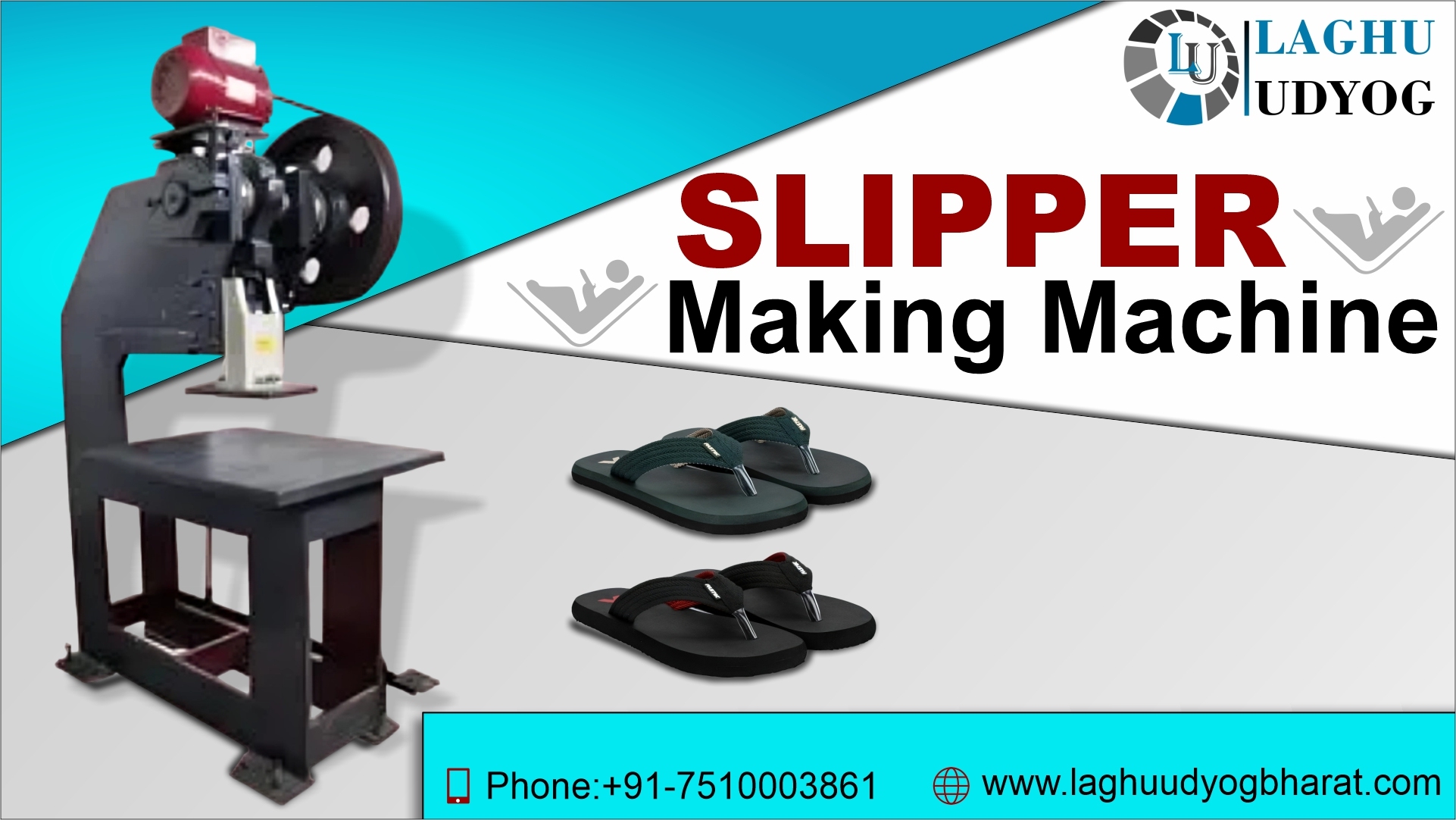
Automatic Slipper And Chappal Making Machine In Bhopal

Footwear is a basic necessity, and its demand is ever-growing. The production of slippers and chappals, essential types of footwear in many parts of the world, has seen significant advancements with the introduction of specialized machinery. These machines have revolutionized the manufacturing process, making it more efficient, cost-effective, and capable of producing high-quality products. This article explores the different types of slipper and chappal making machines, their features, benefits, and their impact on the footwear industry.
Types of Slipper and Chappal Making Machines
Manual Slipper and Chappal Making Machines:
Functionality: These machines require manual operation and are suitable for small-scale production.
Advantages: Low initial investment, simple to operate, and ideal for startups and small businesses.
Disadvantages: Lower production speed and higher labour costs compared to automated machines.
Semi-Automatic Slipper and Chappal Making Machines:
Functionality: Combine manual and automatic processes, increasing production speed and efficiency.
Advantages: Moderate investment, improved production speed, and better consistency in product quality.
Disadvantages: Still requires significant human intervention, which can limit production capacity.
Fully Automatic Slipper and Chappal Making Machines:
Functionality: Operate with minimal human intervention, fully automating the production process.
Advantages: High production speed, consistent product quality, and reduced labour costs.
Disadvantages: Higher initial investment and maintenance costs.
Key Features of Slipper and Chappal Making Machines
High Efficiency: Automated and semi-automated machines can produce a large number of slippers and chappals in a short period.
Versatility: Machines are capable of producing various designs, sizes, and types of slippers and chappals, catering to diverse market needs.
Precision: Advanced machines ensure precision in cutting, stitching, and finishing, resulting in high-quality products.
Cost-Effective: Despite the higher initial investment, automated machines reduce labour costs and increase production efficiency, leading to long-term cost savings.
Durability: Machines are built with robust materials and advanced technology, ensuring longevity and reliable performance.
Benefits of Using Slipper and Chappal Making Machines
Increased Production Capacity: Automated and semi-automated machines significantly boost production capacity, allowing manufacturers to meet high demand without compromising on quality.
Consistency and Quality: These machines ensure consistent quality in every pair produced, which is crucial for brand reputation and customer satisfaction.
Cost Savings: Although the initial investment for automated machines is higher, the reduction in labour costs and increased production efficiency result in substantial long-term savings.
Innovation and Customization: Modern machines offer the flexibility to produce customized designs and styles, enabling manufacturers to innovate and stay competitive in the market.
Reduced Labor Dependence: Automation reduces the reliance on manual labour, mitigating risks associated with labour shortages and increasing overall productivity.
Impact on the Footwear Industry
The advent of slipper and slipperl making machines has had a profound impact on the footwear industry. These machines have not only improved production efficiency but also enhanced the quality and variety of products available in the market. Small-scale manufacturers have been able to scale up their operations, while large-scale producers have benefited from increased productivity and cost-effectiveness. Additionally, the ability to produce customized and innovative designs has allowed manufacturers to cater to evolving consumer preferences and trends.
Conclusion
Slipper and chappal making machines have revolutionized the footwear manufacturing process, offering numerous advantages in terms of efficiency, cost savings, and product quality. As technology continues to advance, these machines are expected to become even more sophisticated, further transforming the footwear industry. Whether for small-scale startups or large manufacturing enterprises, investing in these machines is a strategic move that can lead to significant growth and success in the competitive footwear market.

image
喜欢
评论
分享
laghu udyog profile picture laghu udyog profile picture
laghu udyog
2 年

Automatic Pouch Packing And Spices Packing Machine

In today's fast-paced world, packaging plays a critical role in preserving product quality, extending shelf life, and enhancing consumer convenience. Among the various types of packaging machines, pouch packing machines and spice packing machines stand out due to their versatility and efficiency. This article delves into the intricacies of these machines, exploring their functionality, applications, and benefits.
Pouch Packing Machines
Packing machines are designed to fill and seal products in flexible pouches. These machines are widely used in various industries, including food and beverage, pharmaceuticals, cosmetics, and household products. The rise in demand for convenient and eco-friendly packaging solutions has significantly boosted the popularity of pouch packing machines.
Types of Pouch Packing Machines
Form Fill Seal (FFS) Machines: These machines form pouches from a roll of film, fill them with the product, and then seal them. They are further categorized into:
Vertical Form Fill Seal (VFFS) Machines: Ideal for granular and powdered products.
Horizontal Form Fill Seal (HFFS) Machines: Best suited for liquid and semi-liquid products.
Pre-made Pouch Packing Machines: These machines use pre-formed pouches, filling and sealing them in one or multiple stations. They are suitable for a wide range of products and offer flexibility in pouch styles and sizes.
Advantages of Pouch Packing Machines
Versatility: Capable of handling various products and pouch types.
Efficiency: High-speed operation with minimal human intervention.
Cost-effectiveness: Reduced material wastage and lower packaging costs.
Compact Design: Saves space in manufacturing facilities.
Packing Machines
Packing machines encompass a broad category of machinery designed to automate the packaging process. They are employed across diverse industries to package goods ranging from small consumer products to large industrial items. The main types of packing machines include:
Filling Machines: Used to fill products into containers, bags, or pouches.
Wrapping Machines: Enclose products in a protective film or paper.
Sealing Machines: Seal containers, bags, or pouches to keep the contents secure.
Labeling Machines: Attach labels to packages for identification and branding.
Cartoning Machines: Pack products into cartons or boxes.
Key Benefits of Packing Machines
Increased Productivity: Automation speeds up the packaging process.
Consistency: Ensures uniformity in packaging quality.
Hygiene: Reduces human contact with products, maintaining cleanliness.
Cost Savings: Lowers labor costs and reduces material wastage.
Spice Packing Machines
Spices, being delicate and susceptible to contamination, require specialized packaging to maintain their flavor, aroma, and quality. Spice packing machines are specifically designed to handle these requirements, offering precise measurement, sealing, and preservation.
Features of Spice Packing Machines
Precision: Accurate dosing and filling to prevent overfilling or underfilling.
Versatility: Capable of handling different types of spices, from powders to whole spices.
Sealing: Ensures airtight sealing to maintain freshness.
Speed: High-speed operation to meet market demand.
Advantages of Spice Packing Machines
Enhanced Shelf Life: Airtight packaging prevents moisture ingress and contamination.
Aesthetic Appeal: Consistent and attractive packaging enhances product presentation.
Convenience: Pre-measured packets provide ease of use for consumers.
Compliance: Meets industry standards for food safety and quality.
Conclusion
Pouch packing machines, packing machines, and spice packing machines have revolutionized the packaging industry, offering efficient, versatile, and cost-effective solutions. As consumer preferences evolve and the demand for high-quality packaging increases, these machines will continue to play a vital role in ensuring product integrity and customer satisfaction. Investing in advanced packing machinery not only enhances productivity but also sets the foundation for sustainable growth in the competitive market.

image
喜欢
评论
分享
 加载更多帖子
    信息
    • 男性
    • 帖子 8
  • 01/01/08
  • 工作于 laghu udyog bharat
  • 就读于 Bhopal
  • 住在 India
  • 位于 Katara Hills Rd, Bamugalia Extension, Bagmugaliya, Bhopal, Madhya Pradesh 462043
  • https://www.laghuudyogbharat.com/all-in-one-paper-
关于

Laghu Udyog is a leading manufacturer & supplier, and exporter of Best-quality machinery for various industries.

    相册 
    (0)
    下列的 
    (0)
    追随者 
    (13)
    喜欢 
    (0)
    团体 
    (0)
    For Sale

© {日期} Addonface

语

  • 关于
  • 目录
  • 博客
  • 联系我们
  • 更多的
    • 隐私政策
    • 使用条款
    • Addonfae Referral programs
    • how to use addonface features
    • Advertise on ADDONFACE

取消好友

您确定要取消好友关系吗?

举报该用户

重要的!

您确定要从您的家庭中删除此成员吗?

你戳了 Laghuudyogbharat

新成员已成功添加到您的家庭列表中!

裁剪你的头像

avatar

© {日期} Addonface

  • 家
  • 关于
  • 联系我们
  • 隐私政策
  • 使用条款
  • 博客
  • 更多的
    • Addonfae Referral programs
    • how to use addonface features
    • Advertise on ADDONFACE
  • 语

© {日期} Addonface

  • 家
  • 关于
  • 联系我们
  • 隐私政策
  • 使用条款
  • 博客
  • 更多的
    • Addonfae Referral programs
    • how to use addonface features
    • Advertise on ADDONFACE
  • 语

评论报告成功。

帖子已成功添加到您的时间线!

您已达到 500000000 个好友的上限!

文件大小错误:文件超出允许的限制(11 MB),无法上传。

您的视频正在处理中,我们会在可以观看时通知您。

无法上传文件:不支持此文件类型。

我们在您上传的图片中检测到一些成人内容,因此我们拒绝了您的上传过程。

在群组中分享帖子

分享到页面

分享给用户

您的帖子已提交,我们将尽快审核您的内容。

要上传图片、视频和音频文件,您必须升级为专业会员。 升级到专业版

编辑报价

0%

添加层


选择一张图片
删除您的等级
确定要删除此层吗?

为了销售您的内容和帖子,请首先创建一些包。 货币化

钱包支付

添加套餐

删除您的地址

您确定要删除此地址吗?

删除您的获利套餐

您确定要删除这个包吗?

退订

您确定要取消订阅该用户吗?请记住,您将无法查看他们的任何获利内容。

付款提醒

您即将购买商品,是否要继续?
要求退款

语

  • Arabic
  • Bengali
  • Chinese
  • Croatian
  • Danish
  • Dutch
  • English
  • Filipino
  • French
  • German
  • Hebrew
  • Hindi
  • Indonesian
  • Italian
  • Japanese
  • Korean
  • Persian
  • Portuguese
  • Russian
  • Spanish
  • Swedish
  • Turkish
  • Urdu
  • Vietnamese